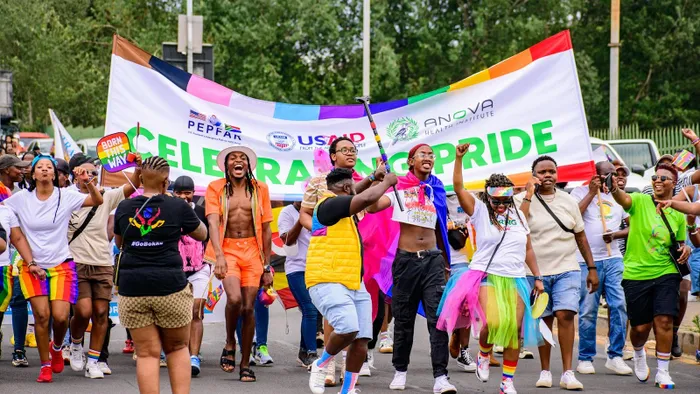
On Saturday 25 October 2025, the streets of Sandton in Johannesburg came alive with vibrant colour, music and unbridled pride as thousands gathered for the 36th edition of the Johannesburg Pride Parade — the city-wide celebration of queer African identity under the theme “Purely, Queerly, African”.
A morning of build-up
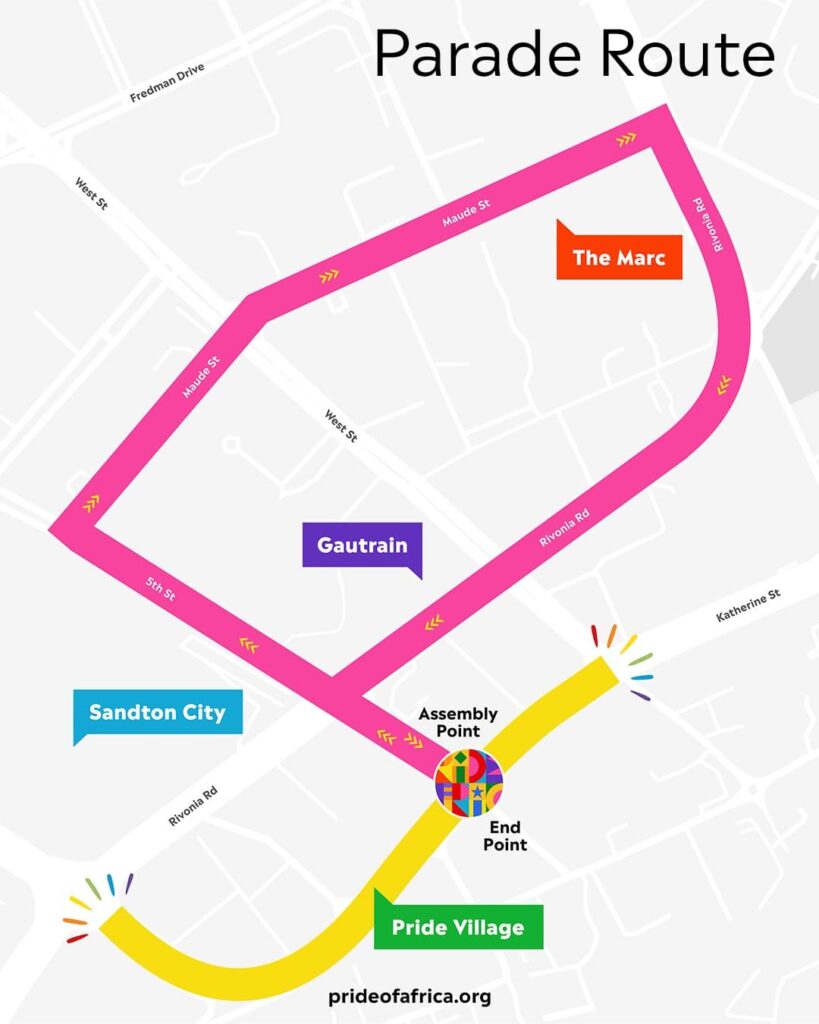
From 10:00am the area dubbed the Pride of Africa Village opened its gates: an activation hub featuring community stalls, food and beverage vendors, performer set-ups and an SME marketplace.
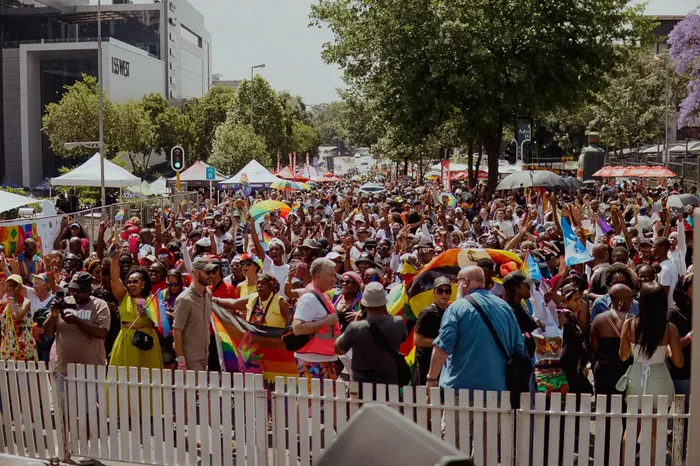
By early afternoon the energy had escalated: marchers in rainbow attire, flags, drums and loudspeakers gathering in Katherine Street before the official parade began.
The parade moves through Sandton
At about 14:00 the parade set off, moving through Sandton’s streets with lively choreography, cheering spectators and a strong sense of purpose. The atmosphere blended festivity with activism — a reminder that visibility remains vital.
Voices from the day
The organisers
Kaye Ally, founder & director of Pride of Africa Foundation and a key architect of this year’s theme, explained:
“This year’s theme is about taking ownership of our narrative… being queer and being African are not opposites; they’re intertwined, powerful, and valid.”
Board member and organising committee member Tebogo Legodi said:
“We live in a country where homophobia still wrecks us every now and again … So it’s very important to have Pride … so we can… say: we are here, we are queer, and we will not apologise for who we are or what we stand for.”
Earlier he added:
“We listened to feedback from last year… this year we’ve made sure to get more space, increase security, add more bathrooms.”
The mayor
Dada Morero, Executive Mayor of the City of Johannesburg, joined the march, addressing participants:
“This is your city. Enjoy it and do everything you want today. Let’s demonstrate to the whole world… that we have rights and we must be allowed to celebrate ourselves in the continent.”
On the theme he said:
“I think we must run with the theme… the importance of it is to deal with the stigmas around African continents so that we start to say to African governments and leaders that we need to recognise all sectors in society, regardless.”
Community voices
A participant, reflecting on the broader African context, said:
“I’m happy to be here because it really means a lot to me … when I look at our family, African counterparts, it’s not easy being there. People literally get killed. So here at least we have that freedom to express ourselves fully.”
Another voice from the community:
“For young queer Africans we say — we see you, you belong, you don’t have to shrink to survive.”
Highlights & atmosphere
- Vibrant visuals: Rainbow flags fluttered everywhere, glitter and sequins flowed, and the rhythm of drums and DJs created a carnival-feel.
- Cultural anchor: With the “Purely, Queerly, African” theme, traditional African patterns, local languages and pan-African queer expressions were woven throughout the event.
- Safe-space emphasis: Organisers ensured more room, additional amenities and enhanced security this year — speaking to feedback from prior years.
- Advocacy and celebration: Beyond joy, the event reaffirmed that the fight for dignity, inclusion and equality continues. The theme and speeches emphasised that visibility is not optional.
- After-party & entertainment: As the sun set, live music, drag shows and DJ sets carried on until midnight, offering a full day’s worth of celebration.
Not without critique
While the day was largely celebratory, it also faced internal reflection. Some organisations called for a boycott, accusing the event of becoming more corporate than political — highlighting tensions about purpose, representation and access.
Organisers responded by reaffirming their core focus on visibility and rights, even as they welcomed celebration.
What it meant
For the thousands who marched, watched or danced, the day represented a powerful affirmation: that queer African identities are valid, visible and worth celebrating. It was a reminder that although rights are enshrined in law, the lived reality still demands visibility, community and collective voice.
As Kaye Ally put it:
“Pride is more than just a party; it’s a statement of resilience, authenticity, and community.”
Looking ahead
The challenge, the organisers agreed, is how to convert a single day of visibility into sustained impact — better inclusion, safer spaces, policy wins, and deeper representation across class, race and gender lines. The march is a beginning, not the finish.