Animated storytelling as a potent healing tool, vehicle for justice and force for change is utilized at Vaal University of Technology.
On the 25 July, the Vaal University of Technology (VUT) held a contemplative research seminar titled “Out of Sight, Out of Mind”, commemorating the unfortunate Boipatong Massacre. Hosted by the Department of Social Justice and Transformation, the seminar looked back at how art, research and memory can create healing as well as institutional transformation.
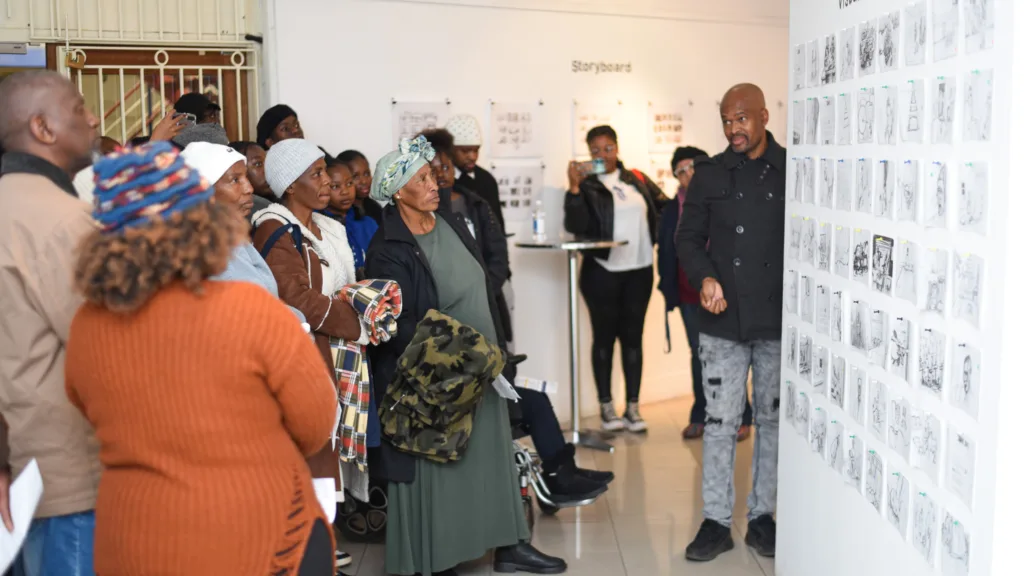
Central to this project was Mr Mashaole Makwela, a VUT lecturer in visual arts, who wedded academic research and animation to narrate the tale of one of South Africa’s darkest hours. His project gave voice to the survivors of the Boipatong Massacre and examined the long-term effects of political violence on families and communities.
“I created an animation to illustrate the political violence and how it affected the people in Boipatong,” said Makwela. “I heard their experiences and testimonies, the way families survived, the trauma that continues. Survivors used the images I created to reclaim their accounts.”
The work revolves around the conflicts between the Inkatha Freedom Party (IFP) and the African National Congress (ANC), which heightened in the late 70s and early 90s. Mr Makwela’s work indicates how ideological divergence between the two parties escalated to senseless brutality, leaving wounds of immense depth in places like Boipatong.
With poignant interviews and picture re-creations, survivors told their pain, determination, and memories of that fateful night. The animation did not only tell history—it allowed survivors to find new ways to reclaim their stories.
Mr George Mvalo, Department Director of Social Justice and Transformation, praised the research for its emotional insight and social relevance.
“When we started the seminar series, we were driven by a need to be close to facts and real experience,” said Mvalo. “Mr Makwela took this challenge and offered something fundamentally revolutionary. We want to encourage our students and staff to conduct valuable research that can bring about real change in our country.”
This work is a testament that art isn’t just about appearance—it’s a tool of truth, healing, and remembrance. By visualizing trauma as testimony, VUT is not only honoring the past but helping forge a fairer future.
To young South Africans, it’s a clarion call: our past needs to be remembered, our voices need to be heard, and our stories need to be told—by us, particularly.