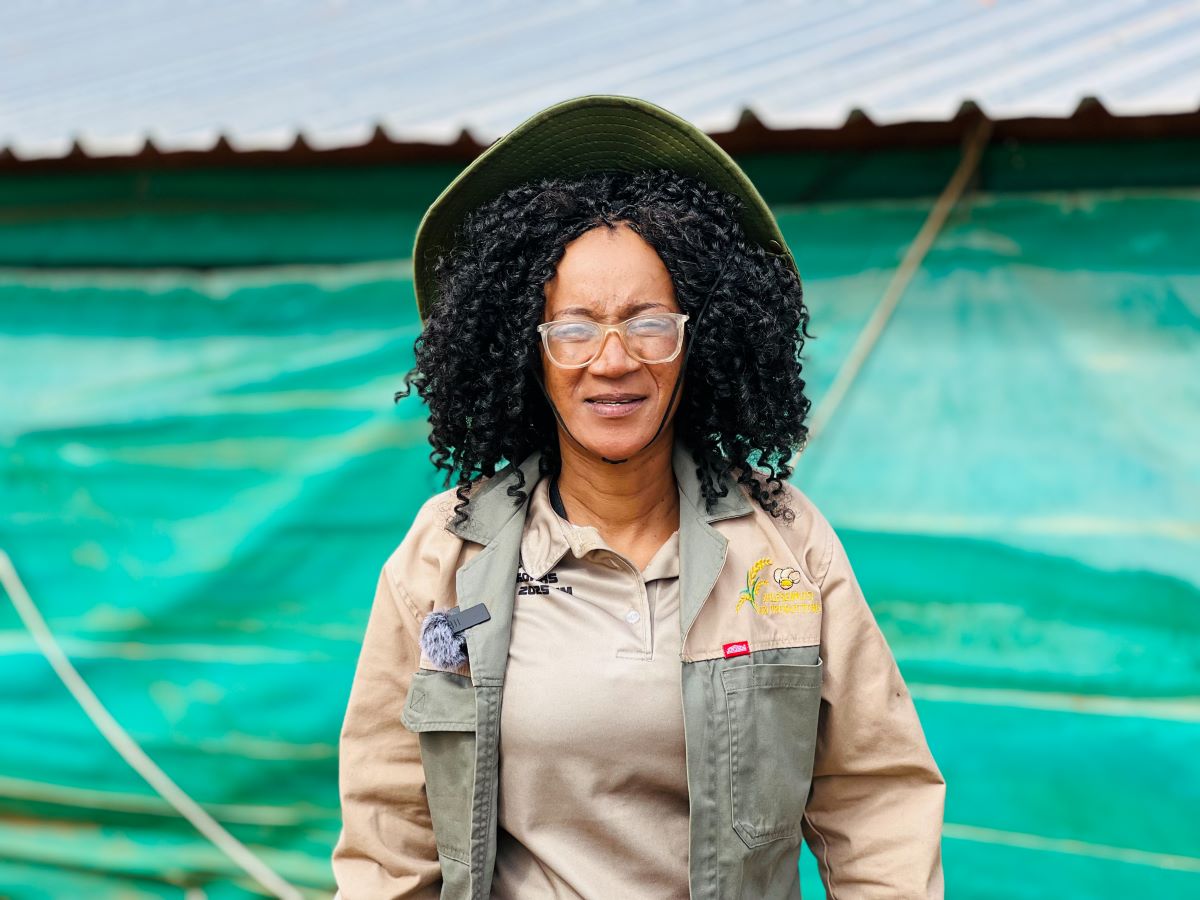
In a world where opportunity often seems reserved for the well-connected, Patricia Beleng’s journey from radio journalism to poultry farming is the kind of story that makes you believe in hustle, grit and destiny. A proud daughter of Sasolburg, Patricia went from covering business seminars on the airwaves to running her own poultry enterprise, armed with passion, a Facebook plea and relentless determination.
From Broadcasting to Broilers
The 32-year-old’s story begins like many township success tales, with a detour. After studying journalism in Pretoria and obtaining her National Diploma, she returned home to work at a local radio station. It was there, covering entrepreneurial events, that her love for business began to blossom.
But journalism wasn’t her only love. She also dabbled in modeling and pageantry, even appearing on national TV as an extra. Yet, when the community radio station shut down, she pivoted again, this time into security, exchanging services with a training academy to earn her qualification.
“Even when I was working in security, I researched how to be the best. I even got my firearm competency, driver’s license, all of it. I give everything my all,” she says.
A Fire for Farming
Things changed drastically when she was accepted into a farmer development program. She left her security job and joined a farming academy in Mpumalanga. Soon after, Sasol stepped in with a R40,000 funding injection. Patricia converted her mother’s garage into a makeshift chicken house and started farming with just 100 chicks.
But the turning point? A Facebook post asking for R50 000.
“I jokingly posted on Facebook asking someone to borrow me R50 000,” she recalls. “One guy from my primary school inboxed me. After seeing my business plan, he funded me immediately. I paid him back, with interest.”
Expanding the Dream, Facing the Doubts
Since September 2023, her business has grown with support from SEDFA, formerly SEDA (R196,000), NYDA (R50,000) and Standard Bank (R40,000). She found a 19-hectre defunct government poultry farm that had been abandoned since 2021, just outside Deneysville. Though the infrastructure was vandalized and neglected, Patricia saw potential.
Still, every day brings new hurdles.
“I wake up at 1 a.m. to start fires because I use coal and gas to heat the chicks,” she says. “The infrastructure is still damaged. No electricity. Inverters and batteries for solar panels were stolen.”
She’s often on-site from 7 a.m. until 7 p.m. In winter? Sometimes 10 p.m. to midnight.
“Transportation is a big issue. I spend so much just getting to town or meetings. If I had a car, I’d save so much,” she explains.
She’s renting in Deneysville now, commuting from her hometown in Sasolburg would be impossible with her schedule.
Training the Future
Patricia isn’t building alone. She employs two permanent workers and mentors 15 students from Tshwane University of Technology and Cape Peninsula University of Technology, a government youth placement programme.
“They come Monday to Friday. If they have schoolwork or presentations, they can shift their days. I’m flexible with them.”
She walks them through each process, from selecting chicks to understanding cage systems and improving hygiene protocols.
“You just open the door and let them walk in by themselves,” she says, demonstrating how to manage the housing without stress. “Everything becomes easier with structured methods.”
Major Contracts & Big Visions
Patricia recently landed two contracts from meat companies in Soweto that require her to supply 1,000 chickens weekly. To meet demand, she collaborates with nearby farmers and resellers.
To meet the demand, she’s collaborating with other farmers and constantly scaling her operations. Her goal? To be a supplier for large retailers like SPAR and Pick n Pay.
“I’m already in SPAR’s supplier development program. What’s holding me back is infrastructure. If I can fix the housing, I can meet health standards and qualify for certificates.”
She currently produces meat chickens (broilers) but plans to start a layer operation for egg production as soon as renovations are complete.
“I prefer caged systems. It protects the eggs from cracking and keeps everything manageable, even identifying sick chickens. I know there’s debate, but it works for me,” she says.
Respect the Hustle
Despite her passion and grit, Patricia faces regular disrespect, especially from older men.
“They undermine me, come with money and think they can run my business for me. Some even try to ‘invest’ but clearly want control. I can tell when they’re being disrespectful. It’s tiring.”
“I’m not doing this to prove anything to anyone. I’m doing it because I want to. I have ambition. I’ve built this from nothing. No one taught me. No family history in farming. But I didn’t give up, and I won’t.”
A Call to Young Women
Patricia knows farming isn’t seen as “fashionable,” especially for young women.
“In my area, there are very few young female farmers. KwaZulu Natal, Mpumalang and Limpopo are better, but here, Free State? Not many. Most women are backyard farmers, not commercial.”
She’s trying to change that, by example.
“People say: ‘That’s the girl who used to model or worked security, now she’s in chickens?’ They don’t understand the importance of food production. We need to teach them.”
Her advice to young people?
“You don’t need a degree to produce food. But don’t ignore education, it helps when you want to grow. Start with what you have. Even from your backyard. Register your company. Don’t compare yourself to others. Just start.”
“I could’ve quit my first year. But I didn’t. There are women in commercial farming, and we can do it too. Don’t sleep on it. Farming is not just for men.”
FOMO Salutes this powerhouse woman who turned a joke on Facebook into a serious poultry empire, and continues to break barriers, one chicken at a time.
Want to partner with Patricia or support her expansion? Reach out to FOMO, we’ll connect you.