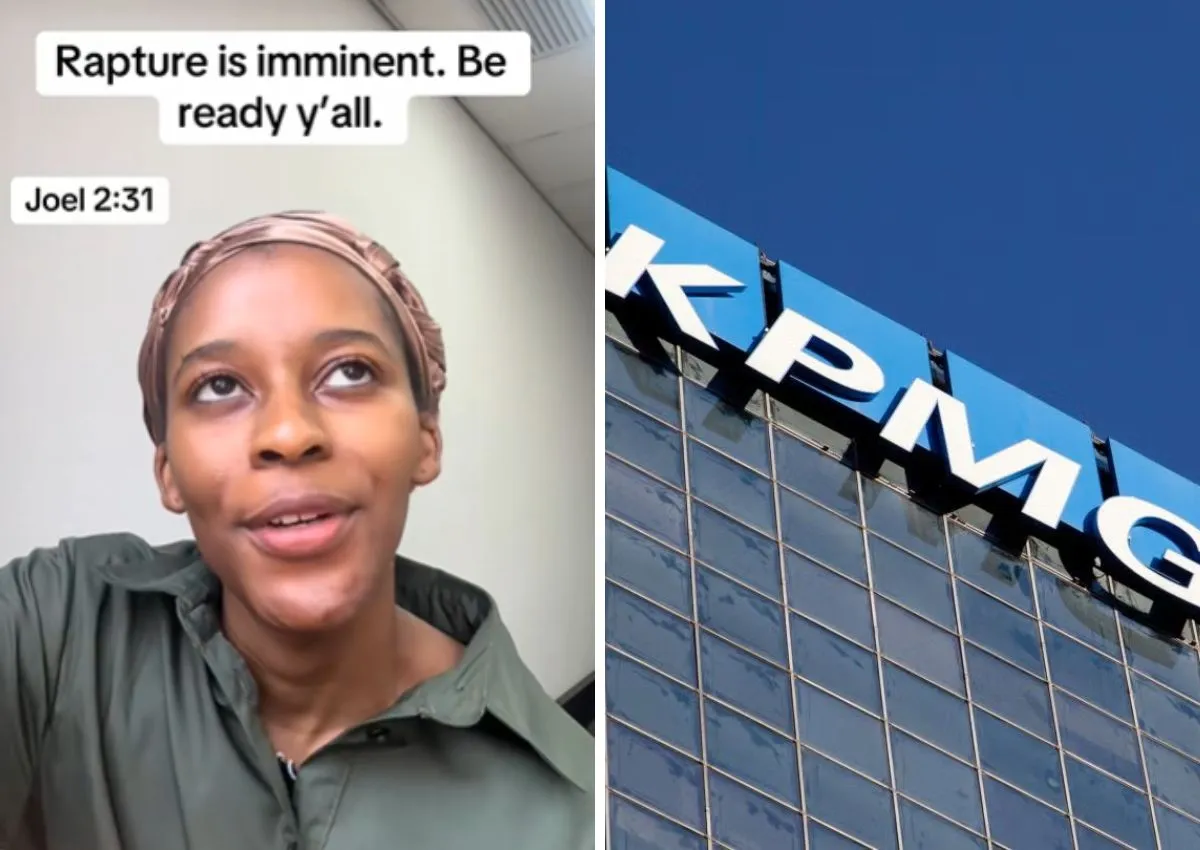
Corporate inboxes are usually filled with project updates, meeting invites, and financial reports. But last week, employees of KPMG across the globe received something that no one expected: a mass email from junior accountant Mahlatse Letoka, warning them of the “imminent Rapture.”
Attached to the email was a 173-page PDF detailing what she believes will unfold on 23–24 September 2025—the collapse of the world economy, World War 3, and the ascension of Christians to heaven during what she called the Feast of Trumpets.
“Please save the attached PDF quickly before it’s too late,” she wrote. “I am a servant of Jesus Christ, and I would rather get fired than watch my colleagues go through this.”
The message went on to warn that New York would “likely go down first,” and that Christians “filled with the Holy Spirit and prayed up” would be taken. “These ready Christians are not taken by aliens,” she added.
Screenshots of the email soon leaked online, spreading across social media platforms from South Africa to the United States. Within hours, Letoka’s name was trending, sparking a mix of ridicule, fascination, and support.
From Boardroom to TikTok
Letoka, a former actress who once appeared on Generations: The Legacy, has not limited her apocalyptic message to the workplace. On TikTok, she has been posting videos expanding on her prophecy, pointing to Biblical visions and even linking the recent Blood Moon lunar eclipse to signs of the end times.
In one clip, she told followers:
“Dear people of God, Rapture is imminent. God did not tell me if it will be in September 2025. But I am saying that it is very, very possible. If you are wise, you would not rule out the possibility.”
Her TikTok bio even contains a link to the same 173-page document she sent to her colleagues.
KPMG Distances Itself
KPMG confirmed the authenticity of the internal email but moved quickly to contain the fallout.
“KPMG in South Africa is aware of an unauthorised internal email that was circulated and has taken immediate steps to address the matter,” the firm said in a statement. “The content does not reflect the firm’s values, and we firmly reject all forms of discrimination, including Islamophobia. We remain committed to fostering a respectful and inclusive workplace for all.”
A Viral Echo Chamber
Letoka’s claims come on the heels of South African pastor Joshua Mhlakela, who also made headlines recently for predicting that Jesus would return to earth on the same September dates. The overlap only fueled the viral buzz, with critics calling it fearmongering while believers shared the material as confirmation of prophecy.
But while the public may laugh, share memes, or argue scripture, psychologists warn that this kind of behavior may point to something deeper.
Belief vs. Breakdown
Religious faith is deeply personal, and throughout history, prophecy and apocalyptic movements have been part of human culture. But where is the line between faith-driven conviction and a mental health crisis?
Clinical psychologist Dr. Nandi Molefe explains:
“Believing in a prophecy is not inherently a mental health issue. The concern arises when those beliefs begin to disrupt one’s functioning—whether in a workplace, family, or social space. If someone feels compelled to send mass warnings, risk their job, or spread panic, we must at least consider the possibility of psychological distress.”
Experts add that intense religious conviction can sometimes overlap with conditions such as delusional thinking, stress-induced breakdowns, or untreated anxiety—especially when individuals feel they are the sole bearers of a divine truth.
The Bigger Question
The episode leaves society with a broader question: Are we witnessing an act of pure faith, or a cry for help?
For workplaces like KPMG, the challenge goes beyond damage control. It highlights the growing need for corporate environments to support mental well-being and to step in when an employee’s beliefs begin to spill over into disruptive, and potentially self-destructive, behavior.
As the much-cited dates of 23–24 September draw closer, millions will watch with curiosity, skepticism, or even dread. Whether nothing happens or something does, the conversation around belief, mental health, and the thin line that separates them has already begun.