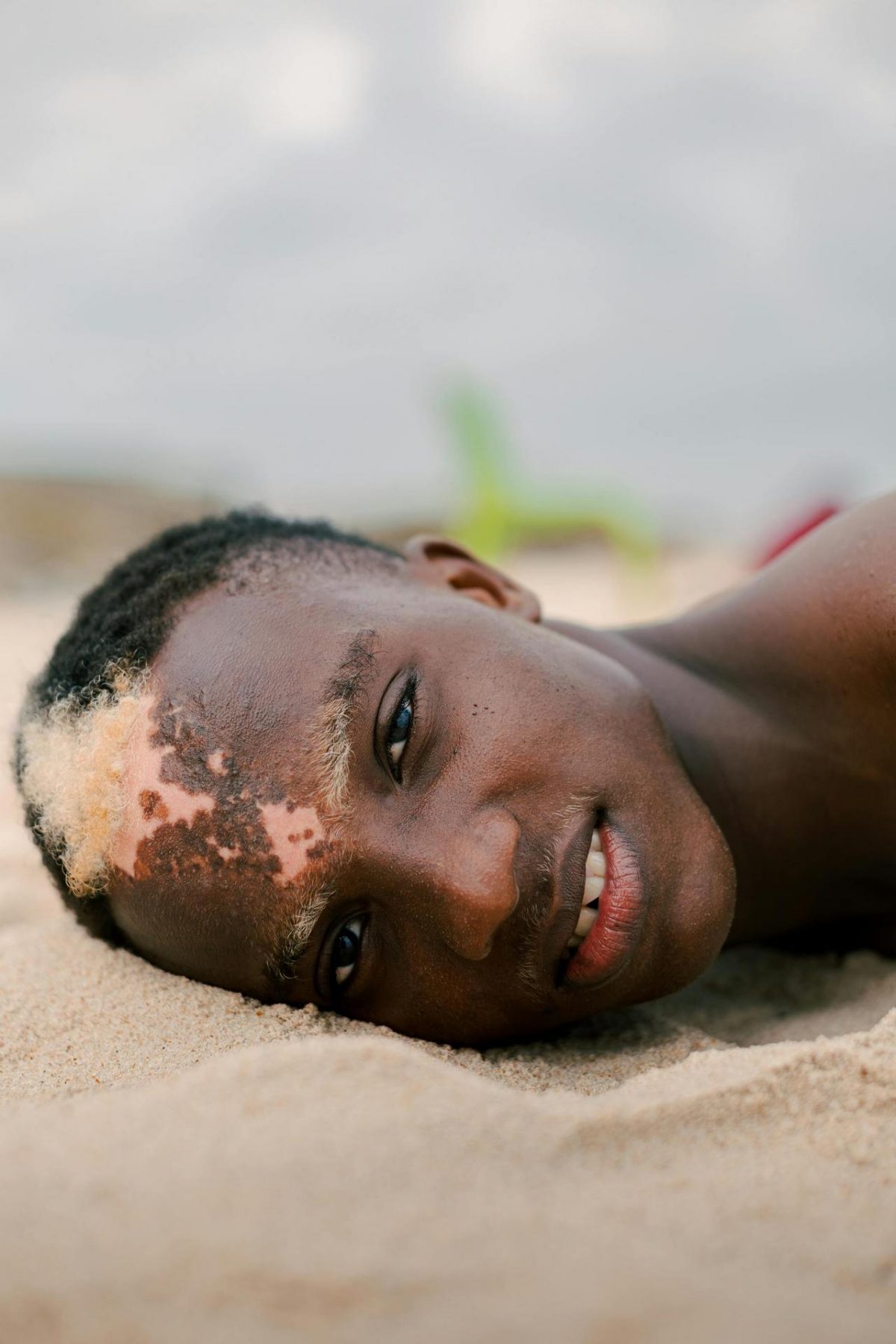
Vitiligo is a condition that causes the skin to lose pigment, resulting in patches of lighter skin. While it doesn’t affect physical health, it can deeply impact self-esteem and social interactions, especially in communities where differences are often misunderstood. In South Africa, where diversity is celebrated but misconceptions still persist, those living with vitiligo navigate unique challenges and triumphs.
To better understand the condition and its impact, we spoke to three individuals living with vitiligo: Tinyiko, Mpho and Michael. Their stories highlight the struggles, triumphs and beauty of embracing their unique skin.
Understanding Vitiligo
Vitiligo occurs when the skin’s pigment-producing cells, called melanocytes, stop functioning. The result is patches of lighter skin that can appear anywhere on the body. While the condition can affect anyone, the contrast is often more noticeable on darker skin tones, making it a source of curiosity—and sometimes stigma—in many communities.
Tinyiko: “I felt invisible, but for all the wrong reasons.” Growing up in Soweto, Tinyiko recalls how difficult it was to deal with the stares and comments about his skin “People would ask if I had been burnt or if I was contagious,” he shares. “It made me want to hide away.” Tinyiko faced bullying at school and struggled with low self-esteem for years. The constant questions and unsolicited advice from strangers only added to her insecurities.
Mpho: “It’s the little things that make it hard.” For Mpho, who lives in Polokwane, the practical challenges of vitiligo have been just as tough as the social ones. “I get sunburnt really easily,” she explains. “Even just a short time outside without sunscreen can leave me in pain.” Like many with vitiligo, Mpho also faces the challenge of finding beauty products that match her skin tone. This can make everyday activities like wearing makeup or finding skincare products more complicated.
Michael: “Education changed everything for me.” Michael, a 30-year-old artist from Durban, believes that awareness is key to breaking the stigma surrounding vitiligo.“I used to think I was alone in this until I saw others like me online,” he says. “Seeing people embrace their skin gave me the confidence to embrace mine.” He started using his art to express his journey, creating pieces that celebrate the beauty of difference. “I realized that the way people see you often reflects how you see yourself. Once I started loving my skin, others did too.”
Tinyiko: “My skin tells a story.” Now in his late 20s, Tinyiko sees his vitiligo as a unique form of art.“I’ve learned to love the patterns on my skin. They’re a reminder of my strength and resilience.”He’s also inspired by public figures with vitiligo, like Canadian model Winnie Harlow, who have helped shift perceptions of beauty on a global scale. Mpho: “I’m part of something bigger.” Mpho believes that her condition has given her a platform to educate others. “Whenever someone asks me about my skin, it’s a chance to teach them about vitiligo,” she says. “The more people understand, the less judgment there will be.”
Michael: “I’m proud of who I am.” Michael’s vitiligo has become a source of pride rather than shame. “My skin makes me stand out, and that’s a good thing,” he says. “I’ve learned to own my uniqueness, and that confidence has transformed my relationships and career.”
Life, Love, and Relationships
Living with vitiligo doesn’t mean living differently—it means embracing life fully. For Tinyiko, it took years to accept love and friendship. “I used to push people away because I thought they wouldn’t understand,” she says. “But I’ve realized that real connections come from who you are, not what you look like.”
Mpho adds that open communication is vital in relationships. “Talking about my insecurities with my partner helped us grow closer. They see me for who I am, not just my skin.” Michael, on the other hand, believes that confidence is contagious. “Once you love yourself, you attract people who love you for you,” he says.
Moving Forward
The journey of living with vitiligo is unique to each person, but one thing is clear: the more society educates itself, the easier it becomes for people with the condition to thrive. Vitiligo doesn’t define those who have it—it’s just one part of their story. Tinyiko, Mpho, and Michael are proof that life’s challenges can be turned into triumphs and that there’s incredible beauty in embracing who you are.
As Michael wisely puts it: “Your skin is just the surface. What matters most is the person underneath.”